Introduction
In the Hindu tradition, sovereignty is understood as a sacred trust from Paramashiva (the primordial Divinity). The Chief Justice of the Supreme Court of KAILASA (SCK) embodies this divine mandate, administering justice in accordance with Dharma for the modern world.
The Triune Manifestation of Divine Justice in KAILASA
Paramashiva, in His infinite compassion, manifests in the earthly plane in three forms to guide humanity:
- Cosmic Constitution: Paramashiva in written form, embodied in the Veda-Agamas
- Presiding Deity: Paramashiva in Deity form as the Archavatara
- The Guru: Paramashiva as the Nijavatara – in the Living human form
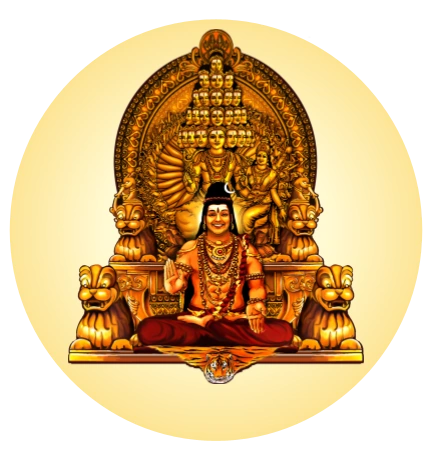
In KAILASA, these three forms converge in the person of the Chief Justice, who is also the Sovereign and Supreme Pontiff of Hinduism (SPH), Bhagavan Sri Nithyananda Paramashivam.
Scriptural Foundations of the Chief Justice's Role
Upholding Dharma and Ensuring Welfare of All
राजा धर्ममुपस्थापेत्, सद्भिरनुकम्पते। (Manusmriti 7.1)
"The Sovereign should uphold Dharma and protect those who are good."
राज्ञो धर्मः प्रजाः सर्वे सदा युक्तः सदा चरेत्।
न हि धर्मात्प्रजाः कश्चित्कर्तव्यं तस्माद्विपर्ययः॥ (Katyayana Smriti)"The Sovereign's duty is to ensure justice for all subjects; ensuring nothing be done contrary to Dharma."
These verses establish the fundamental duty of the ruler – and by extension, the Chief Justice – to uphold Dharma and protect the virtuous.
Embodiment of Dharma
The Chief Justice, like the righteous king of ancient Hindu scriptures, is deeply versed in Dharma and constantly aligned with its principles. This ensures that justice is administered with wisdom, compassion, and in accordance with cosmic law.
Role and Responsibilities of the Chief Justice
Drawing from scriptural guidance, the Chief Justice of SCK is responsible for:
- Interpreting and applying the Cosmic Constitution (Veda-Agamas) in contemporary contexts
- Ensuring impartial justice for all, as emphasized in the scriptures
- Protecting and promoting Dharma through judicial decisions
- Safeguarding the welfare and prosperity of the people through righteous judgments
- Serving as the final arbiter in matters of Hindu law and its application
- Guiding the development of KAILASA's legal system in alignment with Hindu principles
The Supreme Pontiff as Chief Justice
The current Chief Justice, the Supreme Pontiff of Hinduism (SPH) Jagatguru Mahasannidhanam (JGM) His Divine Holiness Bhagavan Sri Nithyananda Paramashivam, embodies the scriptural ideal of the divine incarnation administering justice:
As a member of the Suryavamsa lineage, the SPH continues the tradition of divine justice exemplified by figures like Bhagavan Rama who ruled over the entire Earth. This lineage connects the modern institution of the SCK to the ancient Hindu traditions of righteous governance, proving an unbroken continuity in the jurisdiction of SCK in the modern age.
Modern Application of Ancient Principles
The Chief Justice of the SCK faces the unique challenge of applying ancient Hindu legal principles to modern contexts. This involves:
- Interpreting the Veda-Agamas in light of contemporary legal issues
- Balancing traditional Hindu jurisprudence with international legal standards
- Addressing the needs of the global Hindu diaspora through the SCK's rulings
- Promoting the understanding and application of Hindu legal principles in a diverse, modern world
Conclusion
The Chief Justice of the Supreme Court of KAILASA represents the continuation and evolution of ancient Hindu principles of justice and righteous rulership. By embodying these timeless values while addressing contemporary legal challenges, the Chief Justice serves as the living manifestation of divine justice for KAILASA and the global Hindu community. This unique role combines spiritual authority, legal expertise, and compassionate leadership, ensuring that the SCK remains true to its Hindu roots while meeting the needs of a modern, global society.